The First Hedgerow Walk of Spring
Plan the first hedgerow walk of spring around a few visible changes, with a calm route and simple adjustments when weather, mud, or timing interfere.
The first hedgerow walk of spring works best when you choose one familiar stretch and look for a few changes, not a complete inventory. A lane-side hedge near a village, a public footpath beside pasture, or the edge of a community orchard can all provide enough to notice without turning a short walk into an examination.
The occasion is simple: take a walk after winter, pause at a handful of places, and see what has shifted. The plan below is built for the usual snags—mud, bare-looking branches, uncertain access, and the feeling that you ought to know what everything is called.
Choose a route that leaves room to stop
Pick a short, familiar public route with a clear way in and a comfortable way back. A lane with a broad verge, a signed footpath, or an established path through a village green is easier to use for slow observation than a narrow track where other people, livestock, or farm vehicles need the space.
Check the public access information for the route before setting out, and stay on the permitted path. A hedge may mark a boundary, but that does not make the ground beside it public. If a route crosses working land, gates and signs matter more than a promising-looking gap.
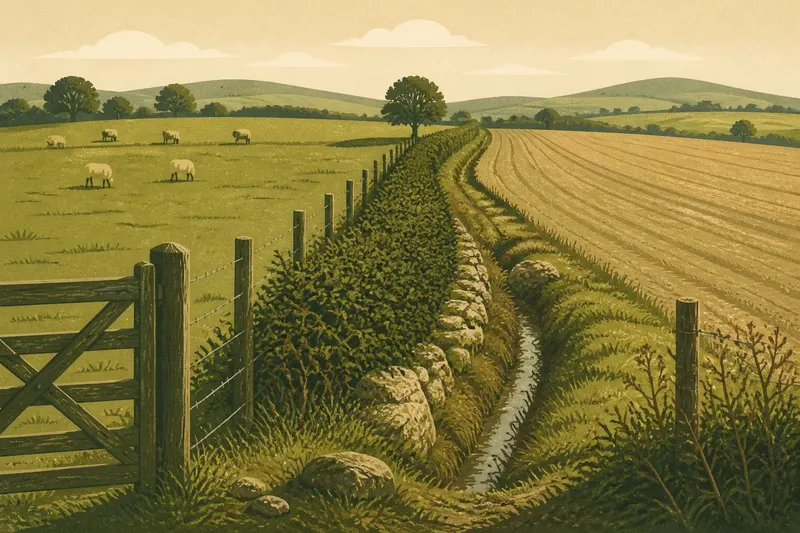
Choose a stretch with some variation: a sunny opening, a shaded bend, perhaps a section beside a ditch or a sheltered wall. Differences in light and exposure give you more to compare, even when the hedge still looks mostly brown.
Leave the day’s route flexible. If the ground is slippery or a path is closed, turn back or use another public route rather than making a detour across fields.
Start too early and the hedge seems unchanged
One common disappointment is arriving before much has become visible. Buds may be closed, leaves absent, and the ground still carry winter’s dull palette. That does not mean the walk has failed; it means the useful signs may be small and close to the branches.
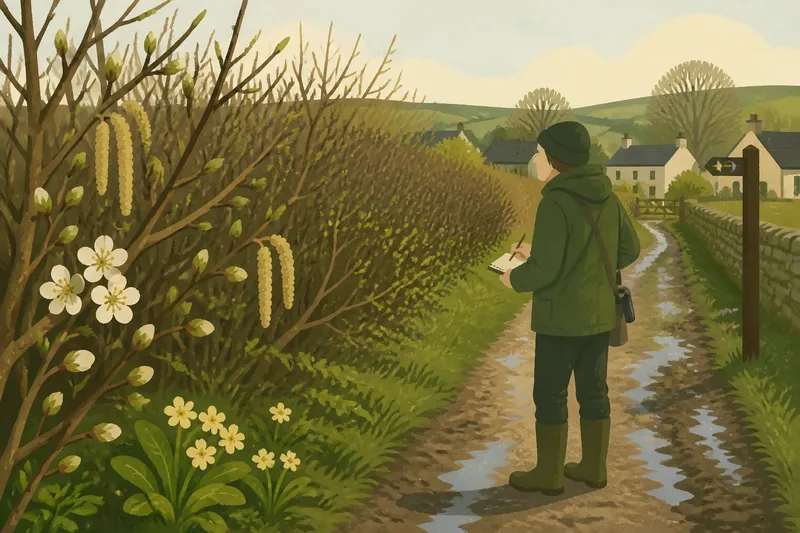
Look for changes in shape and texture before expecting a green wall. Buds can swell along a twig, catkins may hang from hazel, and the first leaves can appear as small folds. On the ground, fresh growth may show at the hedge’s foot, while a few early flowers can brighten a sheltered bank.
Try choosing one twig at a distance and comparing it with a second in a sunnier or more sheltered spot. You do not need to touch or break anything; a change in bud size, color, or outline is enough to give the eye something specific to follow.
If the hedge remains bare, notice what is changing around it: the length of the light, the condition of the path, or the difference between exposed and sheltered sections. Come back another day if you want to see how those same places develop.
Rain turns the slow walk into a mud problem
A spring route can be wet even after the rain has stopped. Clay soil clings to shoes, grass edges may be slick, and puddles can conceal uneven ground. The usual cause is not poor planning so much as a route that drains slowly or has been churned by regular use.
Choose footwear with a sole that grips, and use a walking pole if it is already part of your ordinary kit. Keep to the firmest part of the public path, avoid trampling the verge to get a closer view, and shorten the walk if the ground feels unstable.
Imagine you reach a low, muddy section on the lane-side route you chose. Rather than stepping into the hedge or crossing a field, you turn back to the dry junction and spend the remaining time comparing the sunny hedge near the village entrance with the shaded section beside the wall. The walk still has a purpose; the ground has merely edited the route.
Leave muddy footwear outside before coming indoors, and check your route again if heavy rain has changed local conditions.
The best-looking hedge is behind a gate
Another snag is finding a rich, promising stretch that you cannot legally or comfortably reach. Private gardens, farm tracks, closed paths, and livestock enclosures can sit beside public roads without becoming public places. Curiosity is not an access arrangement.
Look for a nearby public path that offers a view of the hedge from its permitted side. You can observe leaf buds, flowers, or the structure of the branches without entering the hedge or stepping onto private ground. A pair of binoculars can help if the path stays well away from the plants.
If a route is blocked or signed as closed, do not climb a gate or assume a gap is an unofficial entrance. Return to a known public route and make a note to check the local access information later.
For country paths, access rights and local restrictions can vary; follow signs and local guidance, and ask the relevant land manager or access authority if the status is unclear.
Everything looks alike when you try to name it
Trying to identify every bud, leaf, bird call, and track can make a quiet walk feel like an exam with no useful syllabus. The first outing of the season is more satisfying when you separate noticing from naming. A pale flower near the path is still worth seeing if you cannot confidently identify it.
Choose three kinds of change to notice: what is opening, what is flowering, and what has changed on the ground. If birdsong catches your attention, add it as a fourth observation rather than pursuing every sound through the hedge.
- Look for buds that have enlarged or begun to split.
- Notice where catkins or early flowers appear, and whether the spot is sheltered or exposed.
- Compare a sunny hedge face with a shaded one.
- Watch for fresh green growth at the base without stepping off the path.
- Listen for a change in birdsong, then return your attention to the hedge.
Use a small notebook or a phone note to record a plain description: “yellow catkins on the shaded bend” is more useful than a confident-sounding guess. If you want to identify a plant later, take a photograph from the path and consult a reliable local field guide.
The walk becomes a checklist instead of an occasion
People sometimes arrive with a long list of signs they expect to see. The hedge then becomes a set of missed targets: no blossom, no birds, no green leaves. Weather, aspect, cutting, and local conditions all shape what appears, so one visit cannot stand in for the whole season.
Keep the walk modest. Pick two or three places to pause, and give each one a few quiet minutes. At the first stop, look at the outline of the hedge; at the next, notice a detail close to the path; at the last, compare what has changed since the walk began.
Say you set out hoping to spot the first leaves and find none on the exposed lane. You notice instead that the sheltered bend has swollen buds and a scattering of flowers at its base, then write down where each appeared. The expected result is a record of real differences to revisit, not a forced identification or a claim that spring has arrived everywhere.
Leave space for an ordinary interruption, too: a dog walker passing, a gate to close, or a vehicle using the lane. Step aside where it is safe, let others pass, and resume when the path is clear.
What should you notice on a first spring hedgerow walk?
Which changes are easiest to see first?
Look for swelling buds, catkins, early flowers, and fresh growth near the hedge’s base. Their timing varies by place, so compare sheltered and exposed sections rather than expecting one universal sign.
Do you need to know plant names?
No. A careful description of color, shape, and location is a useful observation on its own. Check a field guide later if identification matters to you.
What should you do if the path is muddy?
Stay on the firmest permitted ground, shorten the route, or turn back if footing feels unsafe. Do not make a new path through the hedge or cross private land to avoid a puddle.
How long should the walk take?
Let the route and conditions set the pace rather than aiming for a fixed duration. A short stretch with a few unhurried pauses is enough for a first seasonal look.
Finish with one observation to carry home
Before turning back, choose one detail you would like to check on a later walk: a bud on the sunny side, a flower at the foot of a bank, or the point where a shaded section begins. Write down its location in words you will recognize, such as “past the stone wall, before the bend.”
The first hedgerow walk of spring is not a verdict on the season. It is a small appointment with a familiar place, made more useful by noticing a few changes and leaving the rest for another day. Keep to the path, take the weather as it comes, and let one good observation be enough.