A Seasonal Job or a Steady Rhythm? Reading Two Kinds of Rural Work
Compare a seasonal job with steady rural work by mapping busy periods, contract gaps, travel and local services before choosing a calendar that fits.
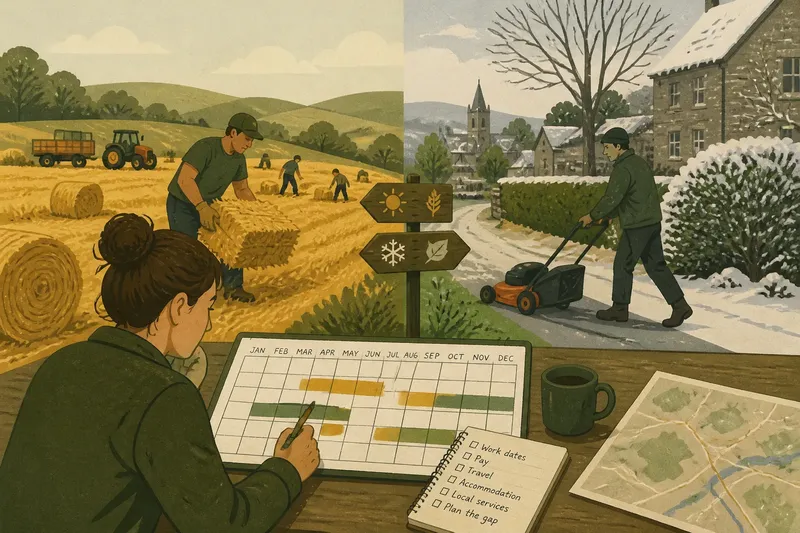
A seasonal job or steady rural work gives you two different calendars, not simply two levels of security. A harvest crew may work intensely while crops are ready, then stop; a year-round groundskeeper may work through quieter months, with tasks changing according to weather and demand. The useful comparison is how each pattern fits the rest of your life.
In rural places, work often follows land, visitors, animals, school terms or the opening hours of local services. Those forces shape when a job is busy, how far ahead you can plan and what options exist between contracts. Neither pattern is automatically better; the details of the working year matter more than the label.
What makes rural work seasonal rather than year-round?
Seasonal work is tied to a period when demand, conditions or materials make a job possible or especially busy. Examples include planting and harvest, holiday accommodation, summer visitor services, winter maintenance and short-term work at a rural event. The role may return each year, but the contract or hours do not necessarily continue between active periods.
Year-round work continues across the calendar, though the work itself may still change with the seasons. A farm employee might shift from field tasks to equipment care or livestock work; a village shop worker may face different demands during holiday periods. “Year-round” describes continuity of employment, not a uniform workload.
Ask what happens in the quiet stretch, not just at the peak. A job can be seasonal in its demands and permanent in its contract, or the reverse can be true.
How does a seasonal job shape the working calendar?
A seasonal calendar concentrates work into a defined window. During that period, shifts may be long or closely scheduled, and the start date can depend on weather, crop readiness, visitor bookings or other conditions. The end may be clear, but the exact timing can move.
The interval between seasons can be useful if you have another source of work, study, caring responsibilities or a personal project that fits the gap. It can also require advance planning for income, transport and everyday commitments. A quiet period is not automatically free time if you need to find another contract or travel for work.
Say you accept a harvest role that begins when a nearby farm needs extra hands and ends when the crop is gathered. You list the contract’s confirmed dates, then arrange a separate winter job before the harvest work ends; the resulting calendar has two named work periods rather than an unplanned gap. If the winter job is only a possibility, you mark it as uncertain and plan for the gap instead of treating it as booked.
Before accepting, ask how the employer communicates changes to dates and hours, and whether returning workers are invited back. Treat a likely return as an opportunity, not as a confirmed part of the calendar.
What does year-round rural work offer, and what does it demand?
Year-round work can make routine planning easier because employment continues across the seasons. You may be able to build regular commitments around a familiar workplace, although hours, duties and travel conditions can still vary. Continuity is useful only if the role’s actual terms suit your needs.
Some year-round jobs bring their own seasonal peaks. A caretaker may have more outdoor work in warmer months and more weather-related tasks in winter; a local service may be busiest when visitors arrive. The quieter period can involve maintenance, preparation or less visible work rather than a pause.
Ask how duties change, who sets the schedule and whether the job involves being on call. Also consider the journey: a route that works for an early start in summer may feel different when daylight is limited or rural roads are difficult. A steady contract does not remove the practical work of getting there.
How should you compare pay and gaps between contracts?
Compare the whole working year rather than the busiest week. For seasonal work, clarify the expected dates, hours, payment schedule and any time between contracts that is unpaid. For year-round work, check how regular the hours are and whether quiet periods affect shifts or duties.
Look at written terms, not just a description such as “full season” or “permanent.” Ask whether accommodation, meals, travel or equipment are part of the arrangement, and what deductions or costs apply. These details can change what a job means for your household without changing its title.
Imagine you are comparing a seasonal farm contract with a year-round groundskeeping role. You enter confirmed work dates, expected hours, payment timing, recurring bills and known travel arrangements on a month-by-month calendar; you leave unconfirmed return work blank. The seasonal option then shows a gap that needs another plan, while the year-round option shows whether its schedule and commute fit your commitments. The calendar clarifies the tradeoff without pretending to predict future income.
Use the calendar to separate confirmed terms from assumptions before you commit.
Which rural work pattern fits around local life?
The fit depends on what else needs a place in your calendar. Seasonal work may suit someone who can move between contracts or has other responsibilities that align with the off-season. Year-round work may suit someone who values a continuing routine, provided the hours and travel are workable.
Local services can affect both choices. Public transport may run less often outside visitor periods; childcare, shops or health appointments may have limited hours or require travel. Check the actual options for the shifts you would work rather than assuming that a nearby service is available when you need it.
Also consider whether several local employers share the same busy season. If they do, alternative work may be plentiful at one point and scarce at another. A conversation with a prospective employer about the local calendar can reveal more than a general promise of future opportunities.
What should you ask before choosing between the two?
Can seasonal work return next year?
It may, but a recurring season is not the same as a confirmed offer. Ask how return work is decided, when the employer usually contacts people and whether the role depends on conditions that can change.
Can a year-round job still have irregular hours?
Yes. Continuing employment can include variable shifts, changing duties or busy periods linked to weather and demand. Ask for the expected schedule and how much notice you receive when it changes.
How can I compare the two calendars?
Write down likely work periods, gaps, travel needs and major commitments for a full working year. Separate confirmed terms from possibilities, then consider whether you can manage the uncertain parts without relying on assumptions.
Should I choose the job with the longer contract?
Not by length alone. Compare hours, conditions, commute, responsibilities and fit with the rest of your life; a longer contract may still be a poor fit, while a shorter one may suit a particular season of life.
How can you compare the jobs without ranking them?
Start with the calendar you can live with, then check whether the contract supports it. Seasonal work concentrates uncertainty around start and end dates; year-round work can spread routine across the year while retaining variable tasks and hours. Neither pattern removes uncertainty, but each places it in a different part of the schedule.
- Contract dates: If the start and end dates are confirmed in writing, mark them as fixed; if they depend on weather or demand, leave room for a shifted schedule and ask when updates will arrive.
- Hours: If expected hours and shift notice are clear, compare them with your commitments; if they are variable or unspecified, ask for the employer’s scheduling process before deciding.
- Quiet periods: If the employer confirms paid duties continue between peaks, include them in your calendar; if work stops or is unpaid, plan another source of work or decide whether the gap is manageable.
- Return work: If next season’s offer is confirmed, record its terms; if the employer only expects to invite returning workers, treat it as uncertain and do not build essential commitments around it.
- Travel: If transport works for every shift you may be assigned, include the route in your plan; if it does not, ask about another schedule or transport option before accepting.
- Local services: If childcare, shops or appointments are available during your working hours, note the arrangements; if they are not, consider a compatible shift or another job pattern.
Before agreeing, confirm the terms in writing and ask what happens if conditions change. Where employment rights, benefits or contract wording are unclear, seek advice from a qualified employment professional or an appropriate local service.
A seasonal job or steady rural work is best judged by the shape of its actual year: busy stretches, quiet stretches, travel, obligations and the room left for everything else. Put those on one calendar before deciding. In a seasonal job comparison, the unfilled spaces deserve the same attention as the shifts; they are part of the working arrangement, even when nobody lists them in the advert.